

Law of Practice
Practice is the engine of durable learning. What determines whether knowledge lasts is not how often learners encounter information, but how deliberately they retrieve and reconstruct it over time.
In Phaedrus, Plato (via Socrates) famously worried that writing would “produce forgetfulness in the minds of those who use it, because they will not practice their memory.” History has shown that he was wrong to fear writing itself. Yet Plato’s deeper insight has endured: memory weakens when we rely on exposure alone, and strengthens when we are forced to recall. Modern science has largely confirmed this intuition. Learning that lasts is built not by storing information safely away, but by returning to it again and again through effortful practice.
Neuroscientist David Eagleman describes memory not as a filing cabinet we open, but as a city we rebuild. Consider the morning commute. You can redraw the route almost effortlessly—the turns, the landmarks, the rhythm of the drive. But try to reconstruct a neighborhood you visited only once, years ago, and the details quickly blur. The difference is not intelligence or attention. It is repetition of reconstruction. The commute has been rebuilt so many times that its pathways are deeply worn into the brain.
Effective, spaced practice works the same way. Each act of retrieval redraws the map. This is why cramming can produce short-term recall, yet rarely yields learning that lasts. Here lies the paradox of remembering: without retrieval, memories fade; with retrieval, memories change. Learning, then, is not preservation but revision. Effective practice accepts this instability and designs for it, using spacing, feedback, and discipline to ensure that what is rebuilt sustains accuracy over time.
Memory and the Forgetting Curve
The modern science of practice begins with 19th-century psychologist Hermann Ebbinghaus, who showed that memory fades in a predictable pattern. His forgetting curve revealed that, without reinforcement, much of what we learn is lost. This insight helped inspire research on spaced practice, now one of the most robust findings in cognitive psychology. Forgetting, in this view, is not failure. It is the opening that makes learning possible again.
Neuroscience clarifies why. Learning is strengthened not by re-exposure, but by retrieval—the act of pulling information out of memory. In practical terms, studying is not “going over” material, but deliberately trying to recall it. Each successful retrieval reshapes neural pathways, making future access faster and more reliable. Brain imaging studies suggest that retrieval engages networks involved in long-term consolidation, particularly in the hippocampus and prefrontal cortex. This is why testing, when used as practice rather than judgment, is so powerful. Quizzes, reflection prompts, and low-stakes recall are not merely measures of learning; they are mechanisms of it.
Effective practice, however, is rarely smooth. It depends on friction, and attempts to make learning effortless often undermine its durability. The concept of desirable difficulties captures this tension: conditions that slow progress and invite error in the short term, yet produce stronger memory and transfer over time.
Manu Kapur’s work on productive failure sharpens the distinction. Students who first grapple with complex problems before receiving formal instruction develop more durable and transferrable knowledge and skills than peers who receive clear explanations upfront. This early struggle in the learning process doesn’t produce correct answers. Instead, it activates prior knowledge, exposes misconceptions, and creates a framework into which later instruction (and effective practice) can meaningfully fit.
For Kapur, the distinction is not between struggle and clarity, but between productive and unproductive struggle. Activity that overwhelms or humiliates learners shuts learning down. Yet practice that merely “goes over” material—polished explanations, repeated exposure, passive review—fails more quietly. It deprives the brain of the effort required to rebuild understanding. When learning feels fluent, memory and transfer often decay beneath the surface.
Rubber and Road: Discipline, Goals, and Executive Function
Of course, none of this matters if practice never happens. Effective practice depends not only on design, but on the learner’s ability to follow through—to practice instead of drifting or defaulting to distraction. Enter executive function. Recent work by Sabine Doebel reframes executive function not as a fixed capacity, but as skills deployed in service of goals. In other words, learners practice more effectively when goals are meaningful, visible, and socially supported. Durable practice therefore depends on clear goals, explicit instruction in effortful strategies, and social supports—from families, peers, schools, and institutions—that sustain those strategies. Without these supports, even motivated learners struggle to practice in ways that endure.
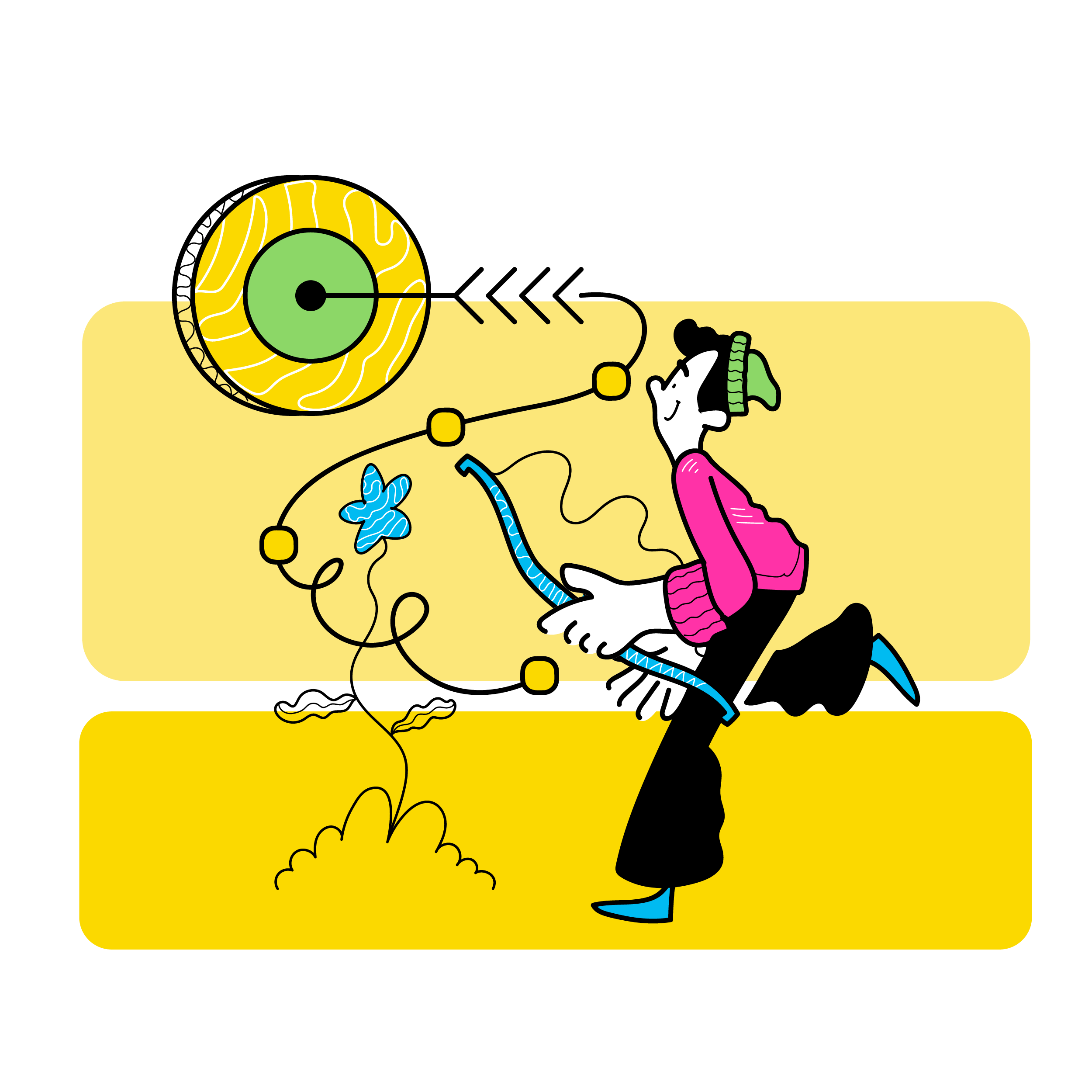
“Learning is not the work of the teacher, but the activity of the learner.”
- Johann Heinrich Pestalozzi
Effective Practice for All Ages
5 Tips for Learning Designers

-
Learning deepens when practice builds over time. Favor cumulative experiences over one-off events. Replace single, high-stakes assessments with sequences of practice that revisit ideas across weeks or months. Pair frequent, low-stakes retrieval—short quizzes, prompts, flash challenges—with authentic work such as projects, presentations, or writing. Durable learning emerges when recall and creation reinforce one another.
-
Retrieval should feel effortful, not punishing. Games, simulations, competitions, and playful constraints preserve cognitive challenge while lowering emotional risk. Trivia formats, prediction games, and peer challenges turn the hard work of recall into shared engagement.
-
Learners differ in their capacity to plan, persist, and self-regulate. Some will need explicit routines, reminders, check-ins, or coaching to practice effectively. Build scaffolds that support effort early and can be gradually removed over time. Do not assume discipline; design for its development.
-
Practice gains power when learners know what it is for. Make goals explicit, return to them often, and show how today’s effort builds tomorrow’s capability. Goals transform repetition from busywork into purpose—and help learners persist when practice becomes difficult.
-
Practice alone is not enough. Learners need opportunities to notice what they are doing and why it works. Create space for reflection: Which strategies helped? Where did retrieval break down? How did spacing or struggle affect performance? Metacognition turns effective practice into a transferable skill.
Practice Pitfalls
Practice is powerful, but it is not a cure-all. Poorly designed practice can waste time, reinforce errors, or exhaust learners without producing durable gains. Repetition without feedback entrenches mistakes; retrieval without correction can strengthen inaccurate memories; struggle without guidance leads to frustration rather than insight.
There is also a risk in equating difficulty with effectiveness. Not all struggle is productive. Tasks can easily overwhelm novice learners and undermine confidence instead of building skill. As such, effective practice must be calibrated: challenging enough to require effort, but supported enough to remain within reach.
Finally, practice depends on conditions learners do not fully control. Time, attention, and executive support are unevenly distributed. Expecting disciplined practice without clear goals, feedback loops, and social support places too much burden on willpower alone. Practice succeeds best not as a test of grit, but as the result of thoughtful design.
Final Thought
Practice is not about preserving the past but re‑creating it. Each act of remembering rebuilds a mental map—reinforcing familiar routes and subtly reshaping the landscape with every pass. Durable learning does not come from storing information safely away, but from returning to it again and again under slightly different conditions, strengthening what matters through use.
As learners mature, the responsibility for this reconstruction gradually shifts. In childhood, teachers and families supply much of the structure: schedules, reminders, feedback, and guardrails. Over time, effective practice becomes increasingly learner‑directed. Goals must be set intentionally, effort must be planned and monitored, and distractions must be managed in service of meaningful goals.
The ultimate aim of practice, then, is not just mastery of content but mastery of learning. When learners can design their own practice by spacing their effort, retrieving what matters, embracing productive struggle, and reflecting on results they begin to take responsibility for rebuilding their own mental city. Over time, they learn which routes to reinforce, which shortcuts mislead, and how to navigate complexity independently and with intention.
Learn More
Hermann Ebbinghaus’s Memory: A Contribution to Experimental Psychology.
The foundational experimental work introducing the forgetting curve and the time dynamics of memory.Nicholas Cepeda and colleagues on spaced practice and distributed learning.
Seminal studies (2006; 2009) demonstrating why spacing practice over time produces durable retention.Robert Bjork and Elizabeth Bjork on desirable difficulties.
Research explaining why effortful learning strengthens long-term retention and transfer.Manu Kapur’s Productive Failure (2016).
Research demonstrating how struggle before instruction can deepen conceptual understanding and transfer.Sabine Doebel’s work on rethinking executive function (2020).
Reframes self-regulation as goal-directed skills rather than fixed mental capacities.David Eagleman’s writing on memory and reconstruction.
Accessible neuroscience explaining memory as a reconstructive, predictive process rather than static storage.