

Law of Representation
Representation is the bridge between experience and understanding. Learners grasp an idea not when they meet it once, in one form, but when they can see it, say it, build it, and translate it from one form into another.
In 1933, London Underground printed a map that was, by any surveyor’s standard, wrong. Harry Beck, an engineering draughtsman, had thrown out true distances and real geography. He straightened the curving tracks into clean verticals, horizontals, and 45-degree diagonals, and spaced the stations evenly. Riders loved it. The map was useless for estimating how far apart two stations were, but it was perfect for the question a rider actually asks: where do I change trains? Beck understood something every good teacher eventually discovers. A representation is not a copy of reality. It is a tool for thinking, and it shows some truths by hiding others.
Every idea we teach reaches the learner through some representation: a word, an equation, a diagram, a story, a gesture, a physical object. None of these is the idea itself. A fraction is not the pizza, the number line, or the symbol ¾; it is the relationship all three are trying to point toward. As Alfred Korzybski warned, the map is not the territory. Learning happens when students stop mistaking one map for the whole territory and begin to see the shape of the land underneath.
Many Forms, One Idea
Psychologist Jerome Bruner proposed that humans understand the world through three modes of representation: enactive (through action and handling objects), iconic (through images), and symbolic (through language and abstract symbols). Young children lean on the first, mathematicians on the last, but Bruner’s deeper claim was that understanding grows as learners move fluidly among all three. The same logic underpins the concrete–representational–abstract sequence used in many math classrooms, where students first manipulate blocks, then draw them, then write the equation.
Cognitive science adds a mechanism. Allan Paivio’s dual coding theory holds that the mind processes verbal and visual information through partly separate channels. When an idea is encoded both ways, it leaves two connected memory traces instead of one, and either can lead back to the other. Richard Mayer’s decades of research on multimedia learning confirm the practical upshot: people generally learn more deeply from words and well-chosen pictures together than from words alone.
Expertise itself turns out to be a matter of representation. In a classic study, Michelene Chi and her colleagues asked physics novices and experts to sort problems. Novices grouped them by surface features—these all have inclined planes—while experts grouped them by underlying principles—these are all conservation of energy. The experts did not simply know more facts. They saw the problems differently.
Translating Between Representations
More representations are not automatically better. Shaaron Ainsworth’s research shows that multiple representations help only when learners can connect them. A graph and an equation of the same function can deepen understanding, but only if the student notices that the slope on the screen is the coefficient in the formula. Without that bridge, two representations simply double the work. The real learning lives in the translation.
The body is part of this story. Susan Goldin-Meadow’s research finds that children’s hands often know things before their words do: a student explaining a math problem may gesture a correct strategy while saying an incorrect one. When teachers encourage students to gesture, and when teachers gesture themselves, students learn more. Barbara Tversky goes further, arguing that spatial thinking—the ability to place, move, and arrange ideas—is the foundation on which abstract thought is built.
Who Is Represented
There is a second meaning of representation, and it matters just as much. Children’s literature scholar Rudine Sims Bishop described books as mirrors, windows, and sliding glass doors: mirrors that reflect a reader’s own life, windows into the lives of others, and doors that invite them to step through. The examples, names, stories, and images we choose are representations too. When learners never see themselves in the material, the message is quiet but clear: this knowledge belongs to someone else. When they do, the content becomes something they can imagine using. How an idea is represented and who is represented in it are not separate questions. Both decide whether a learner can find a way in.
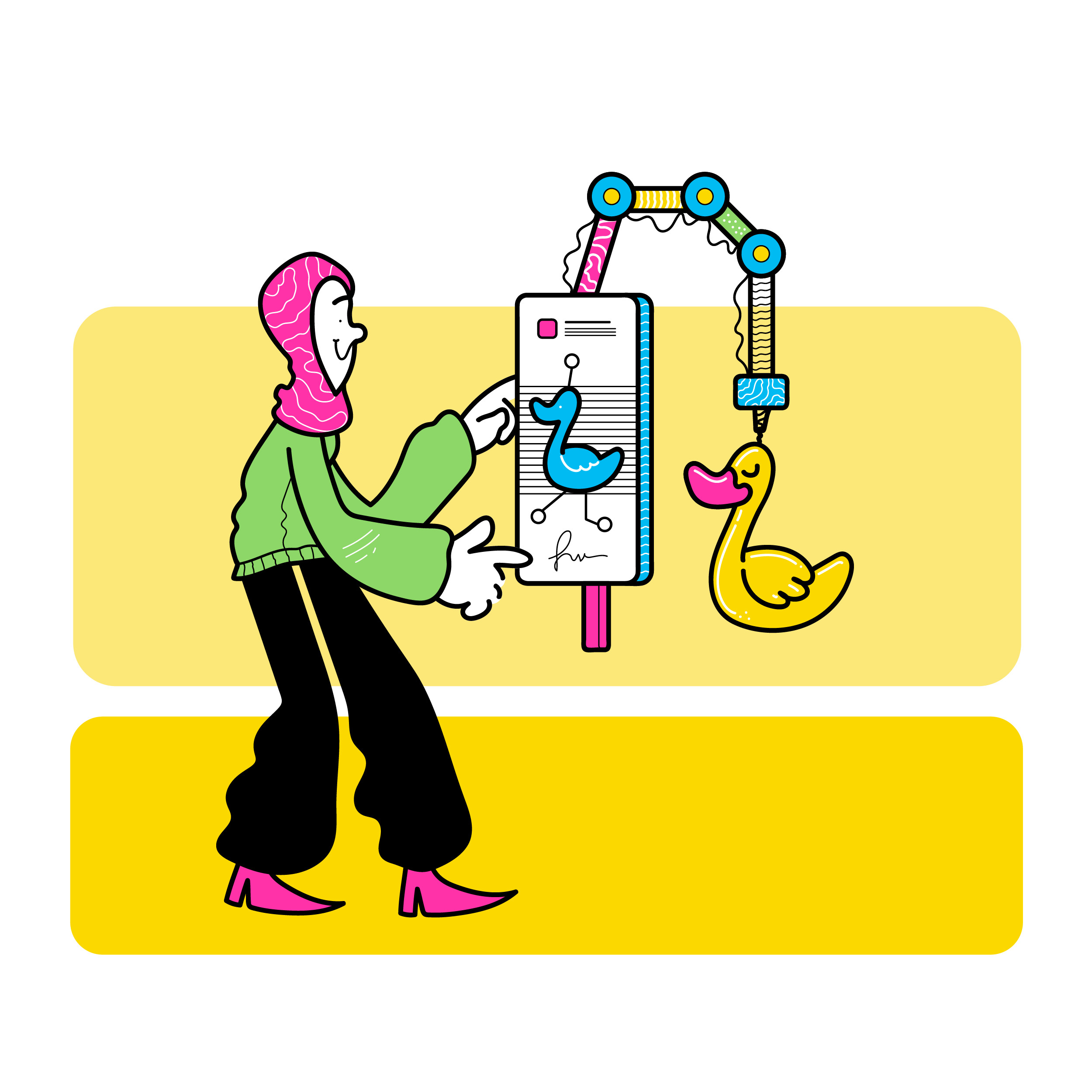
“The map is not the territory.”
- Alfred Korzybski
Representation for All Ages
5 Tips for Learning Designers

-
Pair words with visuals, symbols with stories, and abstract rules with concrete cases. Each form reveals a different facet of the idea, and each gives learners another path back to it. Choose representations deliberately for what they show, not simply to add variety.
-
Do not assume learners will connect a graph to its equation or a model to the principle it illustrates. Point to the correspondences explicitly: this bar is this number; this arrow is this force. Then ask learners to make the connections themselves.
-
Begin with what learners can touch, see, or recognize, then gradually strip away surface details until the underlying structure remains. Concrete materials build meaning; abstraction builds transfer. Learners need both, in that order.
-
Sketches, concept maps, analogies, models, and gestures are not just evidence of understanding—they are ways of producing it. When learners translate an idea into a new form, gaps and misconceptions surface quickly, and so does genuine insight.
-
Choose examples, names, images, and stories that reflect the full range of people in the room, and some who are not. Representation in content is an invitation: it tells learners that this knowledge is theirs to use.
Representation Pitfalls
The most persistent myth in this territory is learning styles—the belief that some students are “visual learners” and others “auditory learners,” and that instruction should be matched accordingly. A landmark review by Harold Pashler, Mark McDaniel, Doug Rohrer, and Robert Bjork found little credible evidence that matching instruction to a preferred style improves learning. The better principle is the reverse: nearly all learners benefit when ideas are represented in multiple, well-connected forms. The content, not the learner’s label, should decide the representation. Maps are best for geography; equations are best for proportional reasoning.
A second pitfall is decoration. Images, animations, and anecdotes added to make material “engaging” can backfire when they are irrelevant to the idea. Mayer calls these seductive details: interesting but extraneous material that pulls attention away from what matters and burdens working memory. A representation should earn its place by clarifying, not by entertaining.
Finally, experts often forget how hard representations are to read. Mitchell Nathan and Anthony Petrosino describe an expert blind spot: the more fluent we become with a representation, the more invisible it becomes to us—and the more we overestimate how obvious it is to novices. A graph that speaks clearly to a teacher may be noise to a student who has never been taught how to read its axes.
Final Thought
Representation is how the invisible becomes thinkable. Every concept we hope to teach—energy, justice, a fraction, a market—must take some form before a learner can grasp it. The forms we choose shape what learners notice, what they remember, and what they believe the idea to be.
As learners grow, the responsibility for representation shifts. Children depend on adults to provide the blocks, the drawings, and the stories. Adolescents begin translating between forms and choosing the ones that work. Experts build their own representations, compress them, and use them to see what others miss.
The ultimate aim, then, is not mastery of any single representation, but fluency across many. A learner who can draw the idea, explain it, model it, and recognize it in an unfamiliar disguise does not merely possess knowledge. Like Harry Beck with his map, they have learned to decide what to show, what to leave out, and how to make complexity navigable—for themselves and for others.
Learn More
Jerome Bruner’s Toward a Theory of Instruction (1966).
Introduces the enactive, iconic, and symbolic modes of representation.Allan Paivio’s Mental Representations: A Dual Coding Approach (1986).
The foundational account of how verbal and visual information are processed and linked in memory.Richard Mayer’s Multimedia Learning.
Decades of research on how words and pictures together support deeper learning, and when they get in the way.Shaaron Ainsworth on learning with multiple representations (2006).
A framework explaining when multiple representations help and why translation between them matters.Susan Goldin-Meadow’s Hearing Gesture: How Our Hands Help Us Think (2003).
Research showing how gesture reveals and shapes understanding.Emily Fyfe and colleagues on concreteness fading (2014).
A review of how moving from concrete to abstract representations supports learning and transfer.Harold Pashler and colleagues, Learning Styles: Concepts and Evidence (2008).
A widely cited review of the evidence, or lack of it, for matching instruction to learning styles.Rudine Sims Bishop, Mirrors, Windows, and Sliding Glass Doors (1990).
The essay that gave educators language for why learners need to see themselves, and others, in what they read.